
Commercial snow removal is an important part of winter property management in London, Ontario. Snow-covered parking lots, blocked entrances and icy pedestrian routes can disrupt daily operations and create safety concerns for employees, customers, tenants and visitors.
However, commercial snow removal cost is not the same for every property. A small office parking lot may need a different service plan from a large industrial facility, shopping plaza or condominium complex. The final price depends on the area requiring service, the frequency of visits, the equipment needed and whether ice management is included.
Understanding these factors can help property owners and managers compare quotes, plan their winter budgets and choose a snow removal contract that fits their operational requirements.
How Much Does Commercial Snow Removal Cost in London, Ontario?
There is no single price for commercial snow removal in London, Ontario. Contractors generally prepare quotes based on the property’s size, layout, expected service frequency and the level of winter maintenance required.
Some providers offer seasonal contracts with a fixed price, while others charge per visit, per snowfall event or for individual services such as salting and snow hauling. These pricing structures can make quotes look different even when contractors are offering similar services.
For example, a seasonal agreement that includes parking lot plowing, sidewalk clearing and routine de-icing may cost more upfront than a basic ploughing-only arrangement. However, it can provide more predictable budgeting and reduce the need to arrange separate services during winter.
The most useful way to estimate your commercial snow removal budget is to assess the property and identify exactly what needs to be maintained throughout the season.
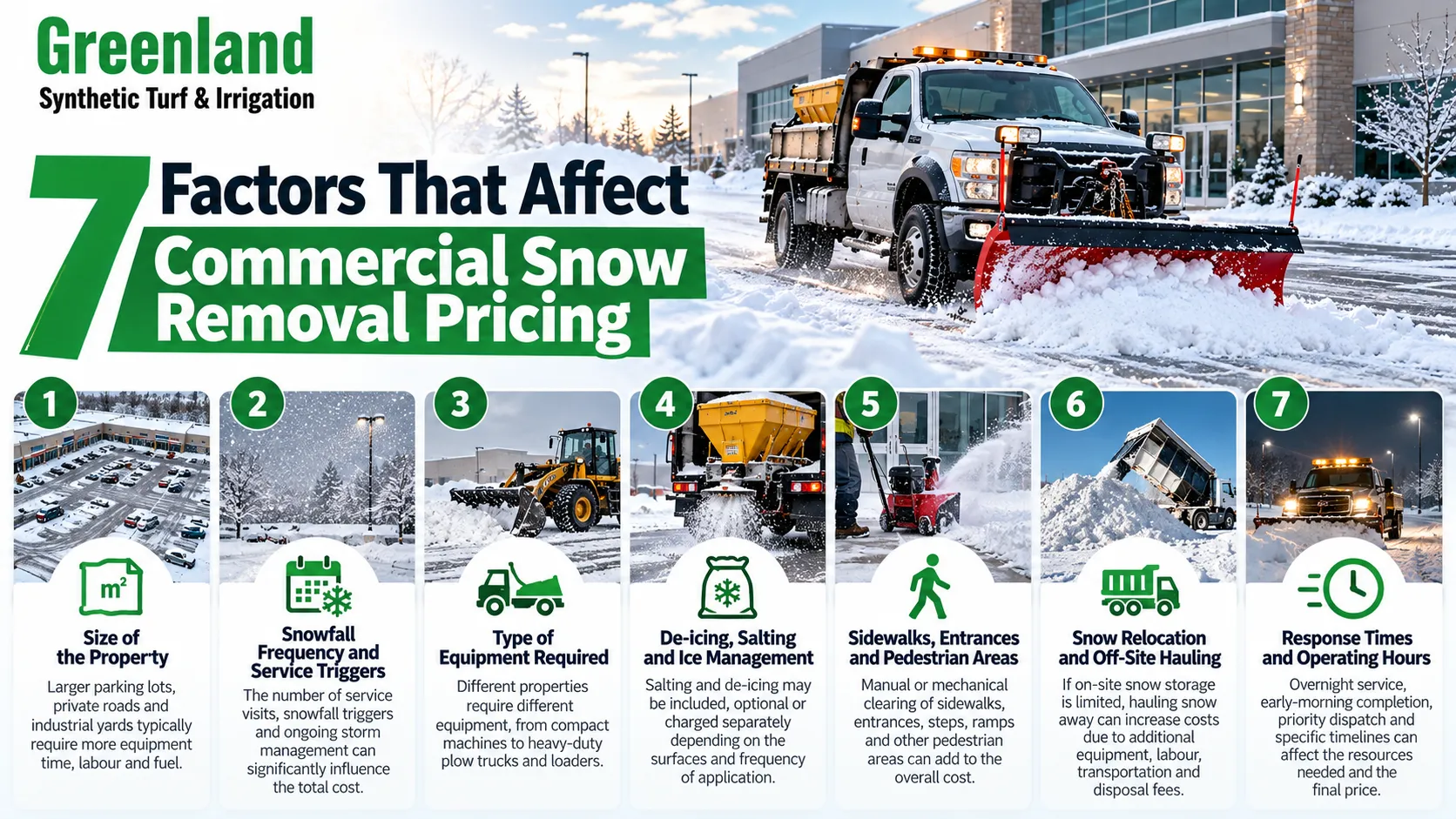
7 Factors That Affect Commercial Snow Removal Pricing
1. Size of the Property
The size of the area requiring snow removal is one of the main pricing factors. Larger parking lots, private roads and industrial yards generally require more equipment time, labour and fuel.
However, contractors do not consider square footage alone. The amount of paved space that needs clearing, the number of parking stalls, the width of access routes and the placement of landscaped islands can all affect the work involved.
A property with a large, open parking area may be quicker to clear than a smaller site with narrow lanes, restricted access and several pedestrian entrances.
2. Snowfall Frequency and Service Triggers
The number of visits required throughout winter can significantly influence the total commercial snow plowing cost.
Some contracts trigger service when snowfall reaches an agreed accumulation depth. Others include monitoring for drifting snow, repeated passes during extended storms or additional visits when conditions change.
A lower snowfall trigger or a requirement for continuous clearing may increase the number of service visits. This can be important for busy retail properties, healthcare facilities, industrial sites and businesses that need access maintained before opening hours.
When comparing quotes, ask contractors to explain the snowfall trigger, how they handle continuing storms and when additional charges may apply.
3. Type of Equipment Required
Different properties require different snow removal equipment.
Compact equipment may be suitable for smaller parking areas and tight access points, while larger commercial lots and industrial facilities may require heavy-duty plow trucks, loaders or specialised snow-clearing equipment.
Equipment requirements can also change when snow needs to be pushed into designated storage areas, moved away from entrances or loaded for off-site removal.
A contractor should assess the property’s layout and identify the equipment needed to complete the work efficiently without obstructing important access routes.
4. De-Icing, Salting and Ice Management
Snow plowing does not automatically resolve every winter safety concern. Ice can develop around entrances, sidewalks, ramps, loading areas and other high-use surfaces, particularly when temperatures fluctuate or melting snow refreezes.
Commercial snow removal contracts may include de-icing and salting, offer them as optional services or charge separately for each application.
The total cost depends on the surfaces being treated, the materials required, the frequency of applications and the service level specified in the contract.
Before accepting a quote, confirm whether salt or other de-icing materials are included, whether application limits apply and how additional treatments are billed.
5. Sidewalks, Entrances and Pedestrian Areas
Parking lot plowing is only one part of a complete winter maintenance plan. Many commercial properties also require manual or mechanical clearing around entrances, sidewalks, steps, ramps, accessible parking spaces and pedestrian routes.
These areas may need separate equipment or additional labour, particularly when access is narrow or snow must be moved away from building entrances.
For condominiums and multi-residential properties, shared walkways, internal roads and entrances can add to the overall scope of work.
When requesting a quote, list the pedestrian areas that must be maintained instead of assuming they are automatically included in the parking lot service.
6. Snow Relocation and Off-Site Hauling
Snow storage can become a challenge as winter progresses. Piles that initially fit along the edges of a parking lot may eventually reduce available parking, obstruct sightlines or interfere with vehicle movement.
Some properties have sufficient space to store accumulated snow on-site. Others need contractors to relocate piles or haul snow away.
Snow relocation and off-site hauling can increase costs because they may require loaders, trucks, additional labour, transportation and disposal arrangements.
If your property has limited snow storage capacity, discuss this during the initial site assessment so the contract accounts for the possibility of additional work.
7. Response Times and Operating Hours
Commercial properties often need winter maintenance completed within specific timeframes. A retail centre may need its parking areas cleared before customers arrive, while an industrial site may need access maintained for deliveries and heavy vehicles.
Requirements for overnight service, early-morning completion, priority dispatch or repeated visits during a storm can affect the resources a contractor must allocate.
The key is to define these expectations before the season starts. A clear service agreement should explain the response process, priority areas, snowfall triggers and any conditions that affect the agreed service level.
Seasonal Snow Removal Contracts vs. Per-Visit Pricing
Choosing the right pricing model is another important part of managing commercial snow removal costs.
Seasonal Snow Removal Contracts
A seasonal contract establishes an agreed price for a defined scope of winter services over a specified period. Depending on the agreement, it may cover plowing, sidewalk clearing, de-icing and other recurring services.
Potential advantages include:
- More predictable winter budgeting.
- Clearly defined service expectations.
- Less need to arrange a new contractor after each snowfall.
- The ability to plan service coverage for the full season.
The contract should explain what is included, whether service limits apply, and how exceptional conditions or extra work are charged.
Per-Visit or Per-Event Pricing
With per-visit pricing, the customer pays each time the contractor attends the property or completes a defined service event.
This arrangement may suit properties with limited requirements or businesses that prefer to pay for individual visits. However, costs can fluctuate depending on the number and severity of snowfall events.
It is important to clarify whether one event includes multiple passes, what happens during prolonged snowfall and whether salting, sidewalk clearing or snow hauling is billed separately.
Which Option Is Better for Your Property?
The right option depends on your property’s needs, winter traffic, budget and tolerance for variable costs.
A seasonal contract may be appropriate when dependable coverage and budget planning are priorities. Per-event pricing may offer flexibility where service requirements are more limited.
Compare the full scope of each quote rather than selecting a contractor based only on the lowest initial price.
How to Compare Commercial Snow Removal Quotes
When reviewing proposals, make sure each contractor is quoting for a comparable level of service.
Use this checklist when requesting or evaluating quotes:
- Property coverage: Are all parking areas, driveways and access roads included?
- Snowfall trigger: At what accumulation level does service begin?
- Visit frequency: Are repeat visits during extended storms included?
- Pedestrian maintenance: Are sidewalks, ramps and entrances covered?
- Ice management: Are salt and de-icing applications included or charged separately?
- Snow storage: Is on-site relocation included, and what does off-site hauling cost?
- Service timing: Are overnight, early-morning or priority response requirements specified?
- Additional charges: Are equipment surcharges, extra visits or material costs clearly explained?
- Documentation: Are service records and visit reports available?
- Insurance and safety: Can the contractor provide appropriate insurance documentation and applicable workplace-safety clearance?
A written agreement helps both parties understand the scope of service and reduces the likelihood of unexpected costs during the season.
How to Prepare Your Property for an Accurate Quote
You can make the quoting process more efficient by preparing a few details before contacting a snow removal contractor.
Start by identifying the areas that require service, including parking lots, loading zones, entrances, sidewalks and internal roads. Note any narrow access points, drainage concerns, designated snow storage locations and areas that must remain accessible.
Next, consider your operating hours and the areas that need priority attention. A property with early-morning deliveries may have different requirements from an office that opens later in the day.
Finally, decide whether you need plowing only or a broader winter maintenance plan that includes snow and ice removal, de-icing and sidewalk clearing.
Providing this information allows contractors to assess the site more accurately and prepare a quote that reflects your actual requirements.
Plan Your Commercial Snow Removal Budget with Greenland Irrigation
Commercial snow removal pricing should reflect more than the size of a parking lot. The right plan considers the property’s layout, snowfall triggers, pedestrian access, ice management requirements and the level of service needed throughout winter.
Greenland Irrigation provides winter maintenance services for applicable commercial, industrial and multi-residential properties in London, Ontario. Services can include commercial snow plowing, industrial snow plowing, snow and ice removal, condo and multi-residential snow removal, de-icing and sidewalk clearing, depending on the property’s requirements and agreed scope.
If you are planning winter maintenance for your property, review our commercial snow plowing services and contact Greenland Irrigation to discuss your site and request a tailored estimate.
Planning ahead makes it easier to define service expectations, compare proposals and prepare for changing winter conditions.
Frequently Asked Questions
1. What affects commercial snow removal cost in London, Ontario?
Commercial snow removal cost depends on property size, site layout, snowfall triggers, service frequency, equipment requirements, de-icing, sidewalk clearing and whether snow must be relocated or hauled away.
2. Is seasonal snow removal cheaper than paying per visit?
It depends on the property and the contract terms. Seasonal pricing can provide predictable budgeting, while per-visit pricing varies with the number of service events. Compare the included services, limits and additional charges before deciding.
3. Does commercial snow removal include salting and de-icing?
Not always. Some agreements include de-icing within the seasonal price, while others charge separately for materials and applications. Confirm what is covered and whether application limits apply.
4. How is commercial snow plowing cost calculated?
Contractors generally assess the serviceable area, property layout, equipment and labour requirements, snowfall trigger, expected visit frequency and any additional services. A site assessment helps establish a more accurate quote.
5. When should businesses arrange a commercial snow removal contract?
Businesses should start planning before winter demand increases. Arranging a contract early gives property managers more time to assess the site, compare proposals, agree on service requirements and prepare for the first snowfall.