
Snow removal is an essential part of winter property maintenance, but clearing accumulated snow does not automatically make a property safe. Even after parking lots, driveways and walkways have been plowed, thin layers of ice, compacted snow and refrozen meltwater can remain on outdoor surfaces.
For commercial properties in London, Ontario, changing winter temperatures can make these conditions particularly challenging. A surface that appears clear in the morning may become slippery later as snow melts and temperatures drop. These changes can affect parking areas, building entrances, loading zones and pedestrian routes.
Effective snow and ice management takes a broader approach. It combines snow clearing with ice monitoring, de-icing, pedestrian access planning and ongoing maintenance based on weather and site conditions.
Understanding the difference between snow removal and complete winter maintenance can help property managers make better decisions throughout the season.
Why Snow Clearing Alone Isn’t Enough
Snow clearing focuses on removing accumulated snow from surfaces such as parking lots, roads, driveways and sidewalks. It restores access and creates space for vehicles and pedestrians to move.
However, plowing does not always remove the thin layer of snow or moisture left behind. Repeated traffic can compact remaining snow, while melting and refreezing can create slippery patches.
Ice may also develop in areas where water collects, drainage is restricted or snow is repeatedly tracked across a surface. These conditions can occur even when the main parking area looks clear.
This is why snow and ice management should include a plan for identifying and treating remaining winter hazards, rather than relying on plowing alone.
6 Reasons Commercial Properties Need Snow and Ice Management
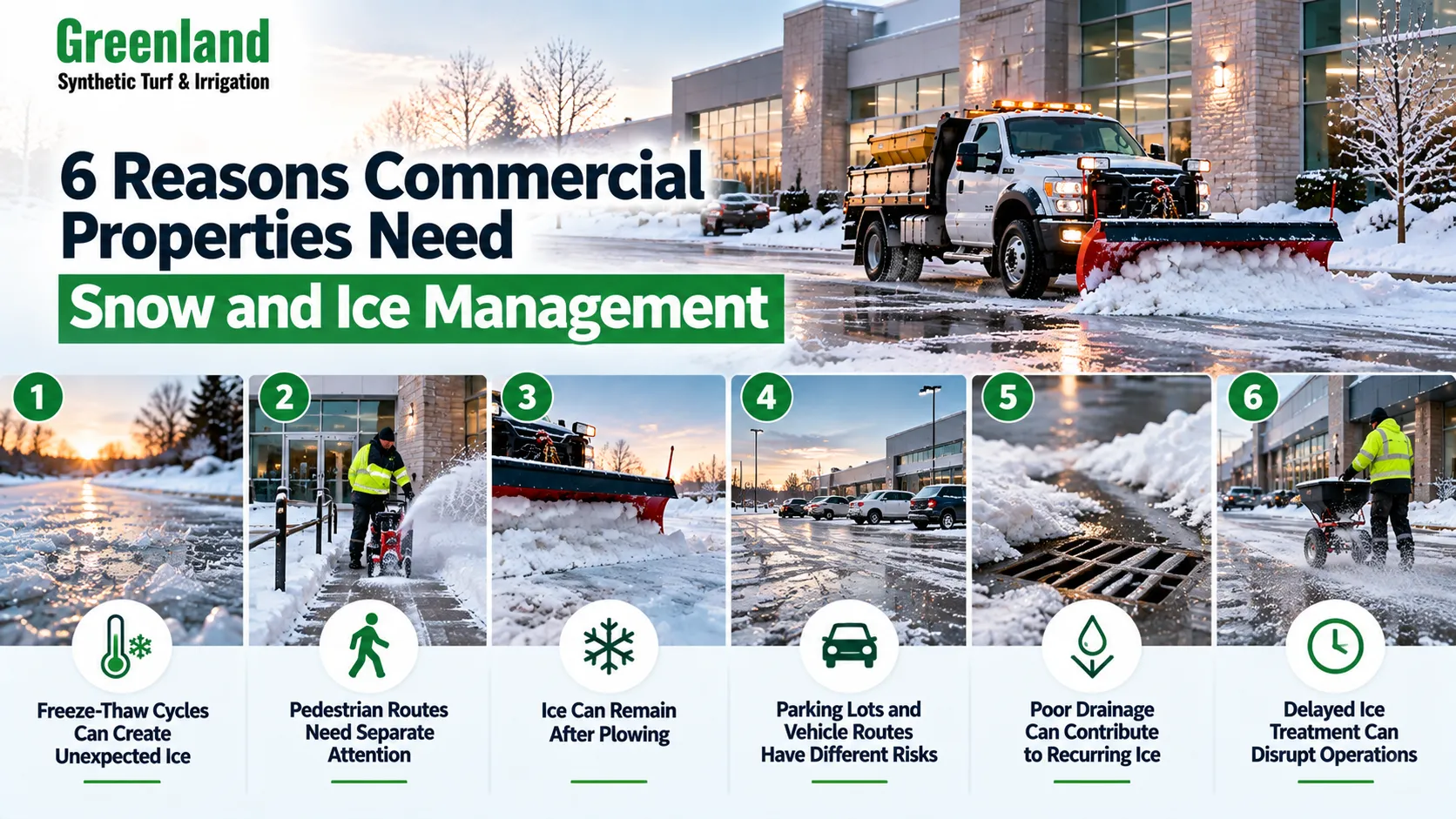
1. Freeze-Thaw Cycles Can Create Unexpected Ice
Winter temperatures do not always remain below freezing. During the day, sunlight or milder weather may melt snow and ice. When temperatures fall again, the resulting moisture can freeze on parking lots, sidewalks, ramps and entrances.
This process can create slippery areas after an initial snow-clearing visit has been completed.
Property managers should consider how changing temperatures affect the site, particularly in shaded areas and locations where water tends to accumulate.
What helps: Include weather monitoring and follow-up inspections in the winter maintenance plan. Where conditions warrant, arrange suitable de-icing or other approved ice-control measures.
2. Pedestrian Routes Need Separate Attention
Parking lots and vehicle access roads often receive priority during snow removal, but pedestrians also need practical access to buildings and outdoor facilities.
Sidewalks, steps, ramps, accessible parking spaces and building entrances can retain snow or develop ice after the main vehicle routes have been cleared.
These areas may require different equipment, additional labour or separate treatment. A clear parking lot does not necessarily mean that the route from a parking space to the entrance is safe.
What helps: Identify important pedestrian routes before winter begins. Include sidewalks, entrances, crossings and ramps in the service scope, and confirm who is responsible for follow-up clearing and de-icing.
3. Ice Can Remain After Plowing
Plowing is designed to push or remove snow, but it may leave behind compacted snow or thin layers of ice. This can happen on heavily trafficked surfaces, loading areas and locations where snow has been repeatedly driven over.
As temperatures change, the remaining material can become more slippery or develop into a harder layer that is difficult to remove mechanically.
The type of surface, the amount of remaining material and current weather conditions all influence the appropriate response.
What helps: Assess surfaces after snow clearing and use suitable mechanical removal or de-icing methods where needed. The selected treatment should be appropriate for the surface, temperature and site requirements.
4. Parking Lots and Vehicle Routes Have Different Risks
Commercial parking areas must accommodate vehicles entering, leaving, turning and stopping. Snowbanks can reduce available space, while ice can affect braking, turning and access around entrances.
Loading zones, delivery routes and internal roads may also need attention because of their operational importance. Treating every part of a site in exactly the same way may not address the areas that need the most attention.
What helps: Establish priority zones based on vehicle movement and property use. Identify key access routes, loading areas, entrances and locations where snow storage could obstruct visibility or movement.
5. Poor Drainage Can Contribute to Recurring Ice
Water that collects in low spots, near downspouts or around entrances can become a recurring winter maintenance problem. If it cannot drain away, it may freeze when temperatures fall.
Snow piles can also redirect meltwater toward walkways or access routes. This can cause ice to return even after the surface has been cleared or treated.
Repeatedly treating the same area without considering the underlying source of moisture may not resolve the issue.
What helps: Identify recurring ice locations during site inspections. Where practical, address drainage or snow-storage issues and include the affected areas in the winter monitoring plan.
6. Delayed Ice Treatment Can Disrupt Operations
Commercial properties often have specific access requirements. Employees may arrive early, customers may visit throughout the day, and deliveries may continue during winter weather.
If ice develops around entrances, parking areas or loading zones, the property may need additional maintenance before normal activities can continue comfortably.
Waiting until a problem is reported can also make it harder to coordinate treatment during busy periods or changing weather.
What helps: Define service triggers, inspection responsibilities and communication procedures before winter. A proactive plan can help property managers identify developing issues and arrange suitable maintenance sooner.
Snow Removal vs. De-Icing: What’s the Difference?
Snow removal and de-icing serve different purposes, and many properties need both.
Snow removal involves plowing, shovelling or otherwise clearing accumulated snow from designated surfaces. Depending on the agreement, it may also include relocating snow piles or arranging off-site hauling.
De-icing involves applying suitable materials or treatments to help break the bond between ice and the surface or reduce ice formation. The appropriate method depends on temperature, surface type, site conditions and product instructions.
Neither service automatically replaces the other. De-icing does not remove large accumulations of snow, and plowing alone may not address remaining ice.
A complete snow and ice management plan considers the condition of the surface after clearing and determines whether further treatment is required.
What Should a Commercial Snow and Ice Management Plan Include?
A practical winter maintenance plan should reflect the property’s layout, operating hours and exposure to winter weather.
Site Assessment and Priority Areas
Identify parking lots, internal roads, entrances, loading zones, sidewalks, ramps and other high-use areas. Note places where water collects, snow drifts or ice repeatedly forms.
Snowfall Triggers and Service Frequency
Agree on when snow-clearing services begin and how continued snowfall will be managed. Some sites may need repeat visits during extended storms, depending on traffic and operational requirements.
De-Icing and Ice Monitoring
Specify which areas may require de-icing, how treatments are arranged and who is responsible for monitoring changing conditions. Materials and application methods should suit the surface and the conditions.
Snow Storage and Drainage
Choose snow storage areas that do not obstruct entrances, pedestrian access, visibility or drainage. Consider whether accumulated snow may need to be relocated or hauled away as the season progresses.
Communication and Service Records
Establish a clear process for reporting ice, requesting additional visits and communicating changes in site conditions. Service records can help property managers review what was completed and identify recurring problems.
Regular Review
Winter maintenance needs can change as snow accumulates and weather conditions shift. Review the plan when recurring ice develops, access routes become restricted or operational requirements change.
How Professional Snow and Ice Management Helps
Managing winter conditions involves more than scheduling a plow after snowfall. Property managers need to consider how snow, moisture, ice, traffic and temperature interact across the site.
A coordinated service plan can help organise snow clearing, identify priority areas, address remaining ice and maintain access to important outdoor spaces. It can also clarify responsibilities so that parking areas, entrances and pedestrian routes are not overlooked.
The exact services required will depend on the property. A small commercial site may have different needs from a large parking lot, industrial facility or multi-residential development.
The objective is to select maintenance measures that match the site’s layout, winter conditions and agreed service requirements.
Snow and Ice Management with Greenland Irrigation
Greenland Irrigation provides winter maintenance services for applicable commercial, industrial and multi-residential properties in London, Ontario. Depending on the property and agreed scope, services can include snow plowing, snow and ice removal, de-icing and sidewalk clearing.
By considering both snow accumulation and changing ice conditions, property managers can plan for a wider range of winter maintenance needs instead of relying on snow clearing alone.
If you are preparing your property’s winter maintenance plan, explore Greenland Irrigation’s snow and ice removal services to discuss the areas that need attention and the level of service appropriate for your site.
Planning ahead helps establish clear expectations before winter conditions become more challenging.
Frequently Asked Questions
1. What is snow and ice management?
Snow and ice management combines snow clearing with measures to monitor, control and reduce ice on outdoor surfaces. Depending on the property, it can include plowing, sidewalk clearing, de-icing, snow relocation and follow-up inspections.
2. Why isn’t snow removal alone enough for winter safety?
Snow removal may leave compacted snow, thin ice layers or moisture that later freezes. Additional monitoring and appropriate ice-control measures may be needed to address these conditions.
3. When should commercial properties use de-icing services?
De-icing may be needed when ice is present or conditions are likely to create icy surfaces. The timing and treatment depend on temperature, surface conditions, the product used and the property’s winter maintenance plan.
4. Does snow and ice management include sidewalk clearing?
It can, but sidewalk clearing should be specifically included in the service agreement. Property managers should confirm whether entrances, ramps, pedestrian routes and other designated areas are covered.
5. How can property managers reduce recurring ice problems?
Property managers can identify areas where water collects or refreezes, review drainage and snow-storage practices, arrange appropriate de-icing and include follow-up inspections in the winter maintenance plan.