
Winter in London, Ontario, brings snowfall, freezing temperatures and changing weather conditions that can affect commercial properties, industrial facilities and multi-residential developments. Parking lots, driveways, loading areas, sidewalks and building entrances may all require attention as snow accumulates and ice develops.
While snow plowing is essential for clearing accumulated snow, it does not always address the ice left behind. Meltwater can refreeze, compacted snow can become slippery, and changing temperatures can create new icy patches after a property has been cleared.
Effective snow and ice management in London, Ontario, combines appropriate snow clearing with ice monitoring, winter salting and de-icing where required. Understanding how these services work together helps property owners and managers plan winter maintenance around their property’s layout, traffic and operational needs.
Why Snow Removal Alone May Not Be Enough
Snow removal restores access by clearing accumulated snow from designated surfaces. However, plowing may leave behind compacted snow, thin layers of ice or moisture that freezes when temperatures fall.
These conditions can affect parking spaces, vehicle access routes, ramps, sidewalks and entrances. Areas with poor drainage or limited sunlight may be particularly prone to recurring ice.
Commercial and industrial properties can face additional challenges because vehicles and pedestrians continue moving through the site during winter weather. Snowbanks can reduce available space, while repeated traffic may compact residual snow.
A complete winter maintenance plan should therefore consider what happens after the snow has been cleared. Depending on site conditions, follow-up inspections, ice removal, suitable de-icing treatments and winter salting may be needed.
Understanding Winter Salting and De-Icing
Winter salting and de-icing help manage icy conditions, but the appropriate approach depends on the surface, temperature, weather and site requirements.
What Is Winter Salting?
Winter salting involves applying salt to suitable surfaces to help control ice and reduce the formation or bonding of ice under appropriate conditions. It is commonly considered for areas such as parking lots, drive lanes, entrances and pedestrian routes where icy surfaces may develop.
The timing and amount of salt required depend on current conditions and the product’s application instructions. Salt is not equally effective in every temperature range or situation, so the treatment should be selected carefully.
For property managers researching winter salting in London, the key consideration is whether the treatment is suitable for the property’s surfaces and the conditions expected.
How De-Icing Helps Manage Ice
De-icing refers to treating existing ice or helping loosen its bond with a surface so it can be removed more effectively. Depending on the situation, a suitable treatment may be used alongside mechanical snow and ice removal.
De-icing is not a substitute for clearing large accumulations of snow. Instead, it forms part of a broader maintenance approach that addresses the condition of the surface after snow removal.
A professional assessment can help determine which areas need treatment and whether follow-up maintenance may be necessary as temperatures change.
Rock Salt vs. Sand-Salt Treatments
Rock salt is a common name for sodium chloride used for winter ice control. Under suitable conditions, it helps lower the freezing point of water, making it useful for certain de-icing applications.
Sand-salt treatments combine abrasive material with salt. The salt helps with ice control under appropriate conditions, while the sand provides traction on slippery surfaces. The suitability of either approach depends on the site, surface, temperature and maintenance requirements.
Neither option should be treated as universally suitable. Product instructions, application rates, drainage considerations and environmental impacts should all be considered.
If you are comparing rock salt in London or looking into sand-salt treatments, confirm which materials and applications a service provider actually offers. Greenland Irrigation’s material options and treatment terms should be confirmed when requesting a quote; these materials should not be assumed to be available as standalone products.
Commercial Snow Removal and Parking Lot Salting
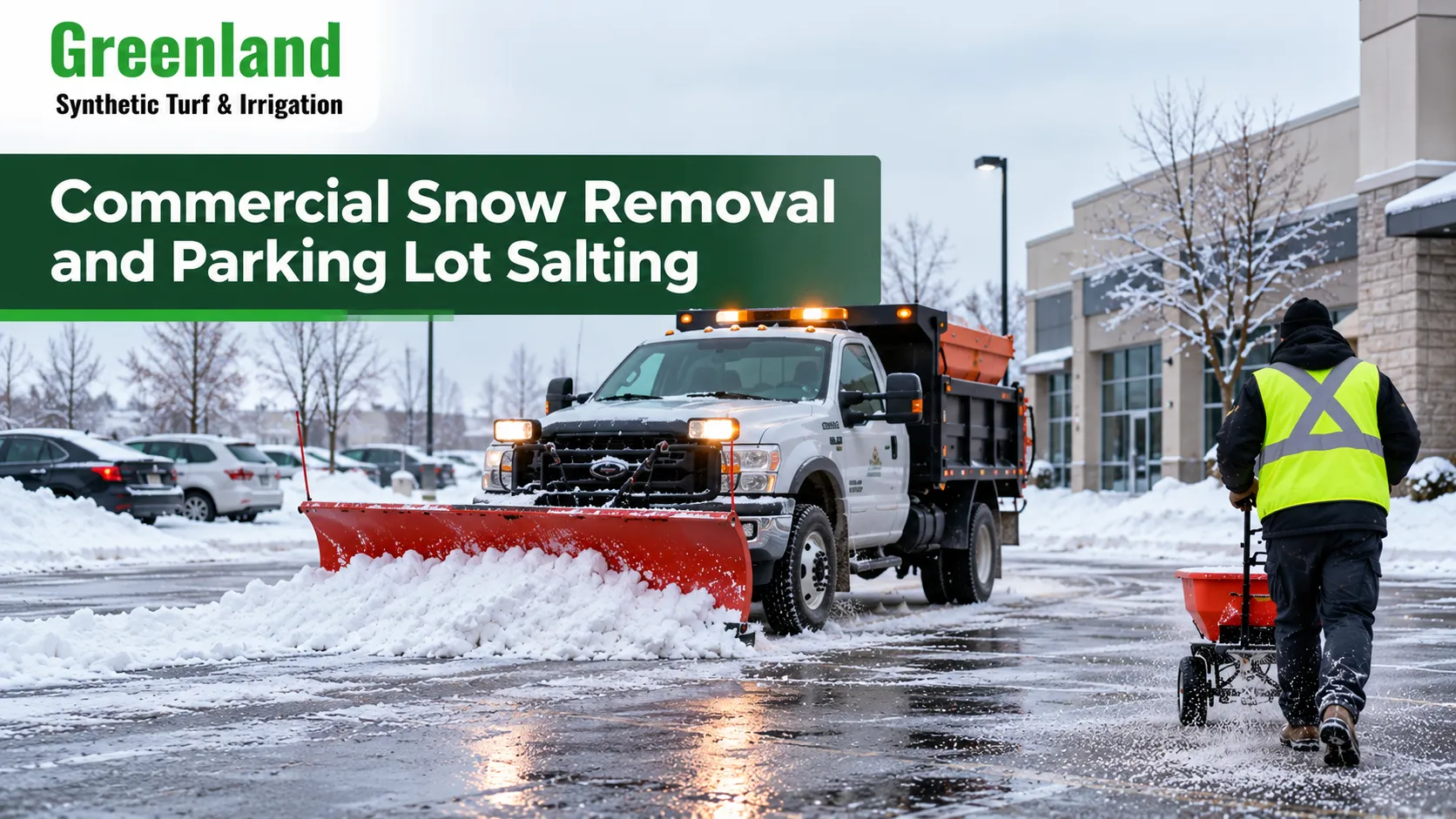
Commercial properties need winter maintenance that supports vehicle access, parking availability and pedestrian movement. Snow accumulation can affect entrances, drive lanes, parking stalls and delivery areas, while residual ice may create additional maintenance needs after plowing.
Commercial snow removal can include clearing designated parking lots, driveways and vehicle routes according to the agreed service scope. Where conditions warrant, winter salting or de-icing may complement snow clearing.
For example, a shopping plaza may need parking areas cleared before its busiest operating hours, while an office property may prioritise building entrances and pedestrian routes. The maintenance plan should reflect the property’s actual usage rather than treating every area identically.
Greenland Irrigation provides winter maintenance services for applicable properties in London, Ontario. Learn more about commercial snow plowing services and discuss which areas need to be included in your winter service plan.
Industrial Snow Plowing and Ice Control
Industrial properties often have large paved yards, loading docks, warehouse approaches, truck routes and employee parking areas. These locations may remain active during snowfall, making access and operational planning particularly important.
Industrial snow plowing focuses on clearing the areas required for vehicle movement and site operations. However, snowbanks can reduce turning space, and ice may develop around loading areas, ramps, entrances and frequently travelled routes.
An industrial winter maintenance plan should identify priority access routes, approved snow storage areas and locations that may require additional ice control. The frequency of service and the treatment methods should reflect the facility’s operating schedule and site conditions.
For facilities with large yards or heavy-vehicle traffic, explore industrial snow plowing in London, Ontario and confirm the proposed service scope with the provider.
Snow and Ice Management for Condos and Multi-Residential Properties
Condominium communities and multi-residential developments have shared outdoor spaces that require coordinated winter maintenance. These may include parking areas, internal driveways, building entrances, sidewalks, ramps and pedestrian connections.
Clearing vehicle routes alone may leave residents with difficult access between parking spaces and building entrances. Similarly, treating an entrance without considering nearby walkways may leave other frequently used areas exposed to icy conditions.
Property managers and condo boards should identify the areas that need routine clearing, determine where ice control may be required and establish a clear process for reporting recurring problems.
The service agreement should specify which shared spaces are included and whether salting or de-icing is part of the agreed scope. Learn more about condo and multi-residential snow removal when planning winter maintenance for a residential community.
Sidewalk Clearing and Ice Removal Services
Sidewalks, steps, ramps and entrances need attention separate from vehicle-focused plowing. Snow may accumulate in narrow spaces, while meltwater can refreeze on pedestrian surfaces even after the surrounding parking lot has been cleared.
Sidewalk clearing helps remove accumulated snow from designated pedestrian routes. Ice removal and de-icing address remaining icy conditions where appropriate. The exact method depends on the surface, the severity of the ice and the applicable treatment requirements.
Property managers should pay particular attention to building entrances, accessible routes, pedestrian crossings and areas where people move between parking spaces and buildings.
When requesting winter maintenance, confirm whether these areas are included in the service plan and how follow-up treatments are handled. Greenland Irrigation’s de-icing and sidewalk clearing services provide a relevant starting point for discussing these requirements.
How to Choose a Winter Maintenance Plan in London, Ontario
The right plan should reflect your property’s size, use and winter exposure. Before selecting a provider, consider the following factors:
- Property layout: Identify parking lots, internal roads, entrances, loading areas, sidewalks and other spaces that require maintenance.
- Traffic patterns: Determine which routes are essential for employees, customers, residents, deliveries and heavy vehicles.
- Snowfall and service triggers: Clarify when clearing begins and how continued snowfall or additional visits are handled.
- Recurring ice problems: Identify areas affected by drainage issues, compacted snow, shade or repeated freezing and thawing.
- Treatment options: Confirm whether winter salting, de-icing or other ice-control measures are included, and which materials are available.
- Snow storage: Decide where accumulated snow can be placed without blocking access, visibility or drainage.
- Service scope and costs: Review included areas, exclusions, additional treatments and the process for requesting extra work.
- Communication: Establish how site concerns are reported and how completed services are documented.
Compare quotes based on the full scope of work, not just the initial price. A clearly defined agreement makes it easier to understand which services are included and what may incur additional charges.
Plan Your Winter Snow and Ice Management
Reliable winter maintenance requires more than clearing snow after a storm. Snow plowing, sidewalk clearing, ice removal, de-icing and winter salting each address different aspects of winter conditions.
For commercial, industrial and multi-residential properties in London, Ontario, the best approach is to identify priority areas, assess recurring ice concerns and agree on a service scope that reflects how the property operates.
Greenland Irrigation provides winter maintenance services for applicable properties, with service requirements and available treatments confirmed according to the property and agreement.
If you are preparing for winter, explore Greenland Irrigation’s snow and ice management services and request a quote to discuss the needs of your property.
Frequently Asked Questions
1. What is winter salting, and when is it needed?
Winter salting involves applying suitable salt to help manage ice on appropriate surfaces. It may be used when conditions favour ice formation or when residual ice needs treatment. The product, timing and application should be selected according to the surface, temperature and site requirements.
2. Do snow removal services in London, Ontario, include salting?
Not necessarily. Some agreements include salting or de-icing, while others list these as separate services or additional charges. Confirm the included treatments, material availability and application terms before approving a winter maintenance contract.
3. What is the difference between rock salt and sand salt?
Rock salt is primarily used to help control ice by lowering water’s freezing point under suitable conditions. Sand-salt treatments combine salt with abrasive material to provide both ice-control assistance and traction. The appropriate choice depends on weather, surface type and site requirements.
4. Can de-icing be arranged without a snow plowing contract?
This depends on the provider’s available services and service terms. Ask whether standalone de-icing visits can be arranged, which locations can be treated and whether any minimum service requirements or additional charges apply.
5. Which areas of a commercial property may require ice removal?
Potential areas include parking lots, drive lanes, loading docks, entrances, ramps, sidewalks, pedestrian crossings and accessible routes. Priority areas should be identified through a site assessment and maintained according to the property’s conditions and agreed service scope.
6. Can industrial and multi-residential properties receive combined snow removal and salting services?
Combined services may be possible, depending on the provider’s offerings and the property’s requirements. Confirm whether snow plowing, sidewalk clearing, salting and de-icing can be included in one agreement and which areas each service will cover.