
Industrial properties face different winter maintenance demands from typical commercial sites. Warehouses, manufacturing facilities, distribution centres and industrial yards often have extensive paved areas, heavy-vehicle traffic, loading docks and access routes that must remain usable during winter weather.
When snow accumulates, the challenge is not simply to clear the main parking area. Snow can restrict delivery movements, block loading zones, reduce turning space and create icy conditions around entrances and pedestrian routes. Delays in clearing critical areas can affect daily operations and make site access more difficult for employees, suppliers and transport operators.
Effective industrial snow removal requires a plan built around the property’s layout, operating schedule, traffic flow and snow storage capacity.
Here are eight challenges that make industrial snow removal different—and what property managers should consider when planning winter maintenance.
1. Large Paved Areas Require More Equipment and Coordination
Industrial properties can include expansive yards, parking areas, internal roads, truck staging zones and vehicle circulation routes. Clearing these areas takes more than a quick pass with a standard plow.
Contractors must consider the size of the site, the width of access lanes, the location of buildings and the most efficient sequence for clearing snow. Equipment selection also matters. Larger open areas may require heavy-duty plow trucks or loaders, while narrower spaces may need smaller equipment for controlled clearing.
Without a clear plan, equipment can spend unnecessary time moving between areas, and important routes may remain blocked while less critical spaces are cleared.
What property managers can do: Identify priority routes and service areas before winter. A site plan showing roads, parking areas, loading zones, snow storage locations and restricted spaces can help the contractor organise the work efficiently.
2. Heavy-Vehicle Access Must Remain Practical
Industrial facilities often depend on tractor-trailers, delivery trucks, forklifts and other commercial vehicles. These vehicles need enough room to enter, turn, reverse, load and leave the property.
Snowbanks can reduce turning space, narrow access roads and obstruct sightlines. Poorly planned snow piles can also interfere with vehicle movements around corners and loading areas.
Industrial snow clearing should therefore account for how vehicles actually move through the site—not just whether the pavement appears clear.
What property managers can do: Map truck routes, turning areas, gate access and delivery approaches. Identify locations where snow accumulation could reduce clearance or visibility, and establish where snow can be safely stored without interfering with vehicle operations.
3. Loading Docks and Delivery Zones Need Priority Attention
Loading docks are essential operational areas for warehouses, distribution centres and manufacturing facilities. Snow or ice around dock approaches, ramps and staging areas can complicate deliveries and disrupt loading schedules.
These locations may also have frequent vehicle movements, limited manoeuvring space and changing pedestrian activity. A single blocked approach can affect more than one delivery or work process.
For this reason, loading areas should be included as priority zones in an industrial snow removal plan. The required service timing will depend on the site’s operating hours, delivery schedule and access requirements.
What property managers can do: Specify which docks and delivery zones must be cleared first, how access should be maintained during prolonged snowfall and who is responsible for reporting changing site conditions.
4. Snow Storage Space Can Become Limited
At the beginning of winter, designated snow storage areas may appear sufficient. As additional snowfall accumulates, those spaces can become increasingly restricted.
Snow piles may reduce parking capacity, obstruct drainage paths, limit visibility or encroach on truck routes. Properties with limited open space may eventually need snow relocated to another part of the site or hauled off-site.
These additional services can require loaders, trucks, labour and more time, which may affect the overall maintenance budget.
What property managers can do: Determine where snow can be stored without blocking operations, drainage or pedestrian access. Discuss the limits of on-site storage with the contractor and establish when relocation or off-site hauling may be necessary.
5. Ice Management Requires More Than Plowing
Plowing removes accumulated snow, but it does not necessarily eliminate the risk of ice. Meltwater can refreeze when temperatures drop, while compacted snow may remain on busy surfaces and become slippery.
Industrial properties can have particular concerns around ramps, loading docks, entrances, pedestrian crossings, steps and areas where vehicles brake or turn. Water drainage and repeated traffic may also influence where ice develops.
A winter plan should address both snow clearing and ice management. Depending on site conditions and the agreed service scope, this may involve de-icing materials, monitoring, repeat treatments and attention to drainage issues.
What property managers can do: Identify high-priority areas for ice control and confirm whether salting or other de-icing applications are included in the contract. Agree on how additional treatments are requested and documented.
6. Shift Work and Continuous Operations Complicate Scheduling
Many industrial facilities operate early in the morning, overnight or across multiple shifts. Distribution centres and manufacturing sites may receive deliveries outside conventional business hours, leaving limited opportunities to clear snow without affecting operations.
A contractor may need to coordinate work around shift changes, vehicle movements, loading schedules and restricted access windows. During a prolonged storm, one clearing visit may not be sufficient to keep critical routes usable.
Service expectations should therefore reflect how the facility operates throughout the day and night.
What property managers can do: Share operating hours, shift changes, delivery schedules and any access restrictions with the contractor. Define priority areas, snowfall triggers and the process for requesting additional service during changing conditions.
7. Pedestrian Safety and Vehicle Traffic Must Be Managed Together
Industrial sites often combine heavy equipment and vehicle movements with employees walking between parking areas, entrances, offices, warehouses and production spaces.
Snowbanks can obstruct sightlines, while uncleared sidewalks and icy crossings can create difficult conditions for pedestrians. Clearing vehicle routes alone may leave employees with limited safe access to buildings.
A comprehensive industrial snow plowing plan should include pedestrian routes and identify areas where vehicle and foot traffic intersect.
What property managers can do: Mark employee walkways, designated crossings, accessible parking spaces, building entrances and other important pedestrian areas. Confirm how these areas will be cleared and treated, and communicate any temporary route changes to site users.
8. Changing Weather Requires an Adaptable Winter Plan
Winter conditions do not follow a fixed schedule. Snowfall can continue after an initial clearing visit, wind can create drifting, and temperature changes can turn melting snow into ice.
A plan that works for one snowfall may not be sufficient for a longer storm or repeated freeze-thaw conditions. Industrial properties may also experience different accumulation patterns around buildings, open yards and exposed access roads.
Reliable winter maintenance depends on clear service triggers, communication and a process for responding when conditions change.
What property managers can do: Agree on how service is triggered, how continuing snowfall is handled and how additional visits are authorised. Establish a communication process for reporting blocked routes, changing priorities and areas that require extra attention.
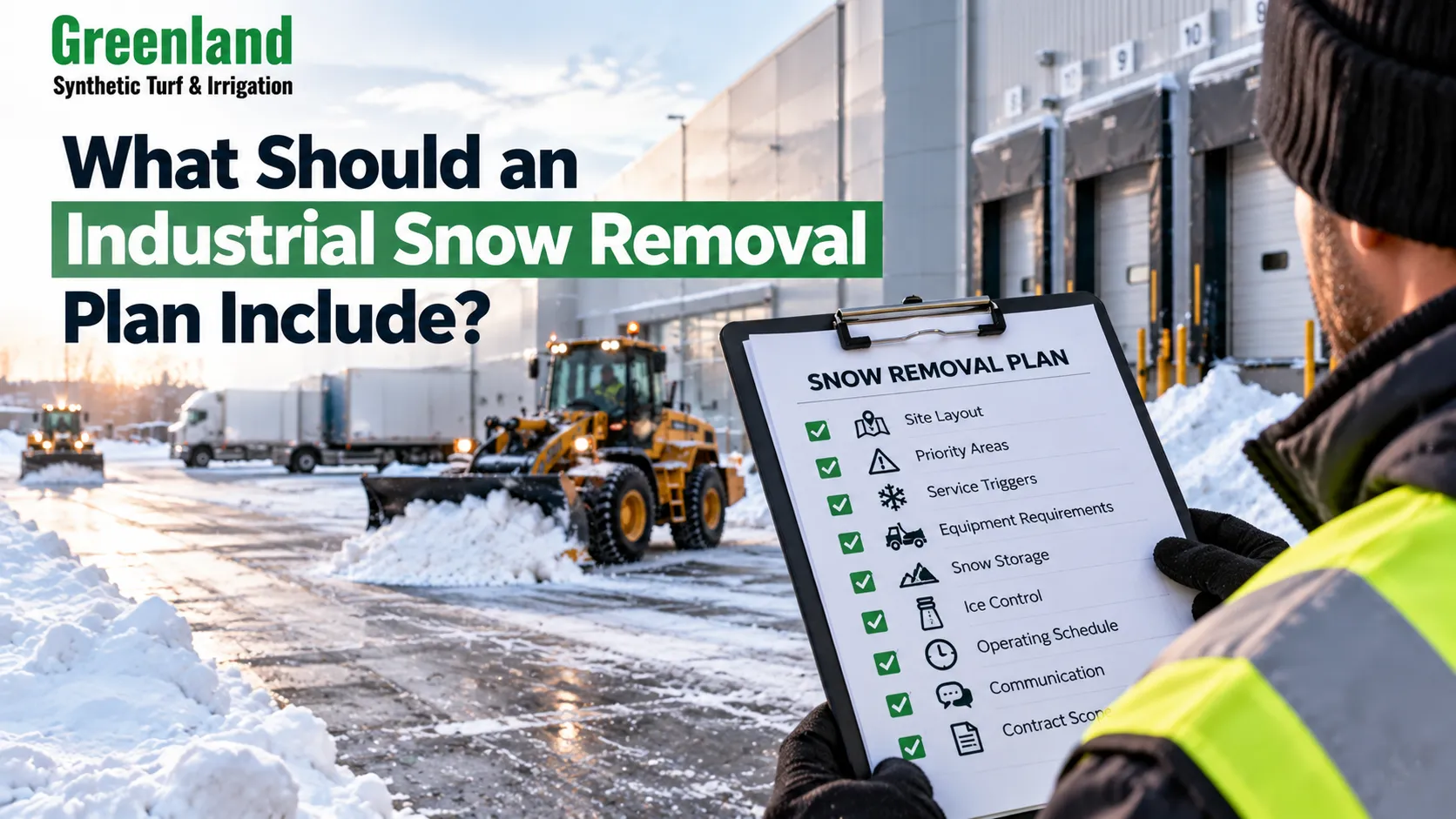
What Should an Industrial Snow Removal Plan Include?
An effective industrial snow removal plan should be based on the facility’s actual operating needs. Before winter begins, property managers and contractors should review the site together and document the following:
- Site layout: Main access roads, parking areas, truck routes, loading docks and restricted spaces.
- Priority areas: Locations that need clearing first to support essential operations.
- Service triggers: Snowfall thresholds and the conditions that require additional visits.
- Equipment requirements: Machinery suited to the property’s size, access limitations and snow accumulation.
- Snow storage: Approved storage areas and the process for relocating or hauling snow.
- Ice control: Priority treatment areas, de-icing responsibilities and additional service requirements.
- Operating schedule: Shift patterns, delivery windows and any access restrictions.
- Communication: Contact details, service updates and a process for reporting urgent site concerns.
- Contract scope: Included services, exclusions, additional charges and agreed response expectations.
A written plan helps establish responsibilities before winter conditions make access more difficult. It also provides a clearer basis for reviewing service performance and adjusting the plan when operational needs change.
How to Choose an Industrial Snow Removal Contractor
Industrial properties need a contractor who understands that snow clearing is closely connected to daily site operations. When comparing providers, look beyond the initial quote and assess whether the proposed service matches your facility’s requirements.
Ask how the contractor will approach large paved areas, heavy-vehicle routes, loading docks and limited snow storage. Confirm which equipment may be used, how service is coordinated during extended snowfall and whether de-icing and sidewalk clearing are included.
It is also worth reviewing the contract’s service triggers, exclusions, additional charges, communication process and documentation practices. These details help you understand what to expect when winter conditions change.
Choose a service plan that clearly defines the work required rather than relying on a general promise to clear snow after a storm.
Industrial Snow Plowing and Winter Maintenance with Greenland Irrigation
Industrial snow removal involves more than clearing open pavement. Large sites need practical planning for vehicle access, loading areas, snow storage, pedestrian movement and ice management throughout winter.
Greenland Irrigation provides industrial snow plowing and winter maintenance services for applicable properties in London, Ontario. Depending on the site and agreed scope, services can include industrial snow plowing, snow and ice removal, de-icing and sidewalk clearing.
If you manage a warehouse, industrial facility or large commercial property, explore our industrial snow plowing services to learn more and discuss your property’s winter maintenance requirements.
Planning early can help your team define priorities, prepare for changing weather and establish a winter service plan that reflects the way your facility operates.
Frequently Asked Questions
1. What makes industrial snow removal different from commercial snow removal?
Industrial snow removal often involves larger paved areas, heavy-vehicle routes, loading docks, delivery zones and more complex operating schedules. The service plan must account for these operational requirements as well as snow clearing and ice management.
2. What equipment is used for industrial snow clearing?
Depending on the property, contractors may use heavy-duty plow trucks, loaders and smaller equipment for restricted areas. Equipment selection depends on site size, snow accumulation, access limitations and the areas that need to remain operational.
3. How often should an industrial property be cleared during snowfall?
The required frequency depends on the snowfall trigger, storm duration, traffic levels and the property’s operating requirements. Busy industrial sites may need repeat visits during extended snowfall to maintain important access routes.
4. Does industrial snow removal include loading docks and sidewalks?
Not automatically. Loading docks, pedestrian routes and sidewalks should be specifically included in the agreed service scope. Property managers should confirm which areas are covered and whether additional clearing or de-icing charges apply.
5. How can industrial properties manage snow storage during winter?
Properties should identify designated snow storage areas before winter and assess how repeated snowfall will affect available space. When on-site storage becomes insufficient, snow relocation or off-site hauling may be required, depending on site conditions and the service agreement.