
When winter arrives in London, Ontario, snow-covered parking lots, blocked driveways and icy walkways can quickly become a challenge for property owners and managers. A single snowfall can affect vehicle access, customer parking, employee entrances and the day-to-day operation of a commercial property.
That is why planning snow removal before winter begins matters. The right winter maintenance plan considers more than plowing snow. It also accounts for access routes, pedestrian areas, snow storage, ice control and the service requirements of the property.
Whether you manage a commercial building, an industrial facility or a multi-residential property, understanding your winter maintenance needs can help you prepare for changing conditions.
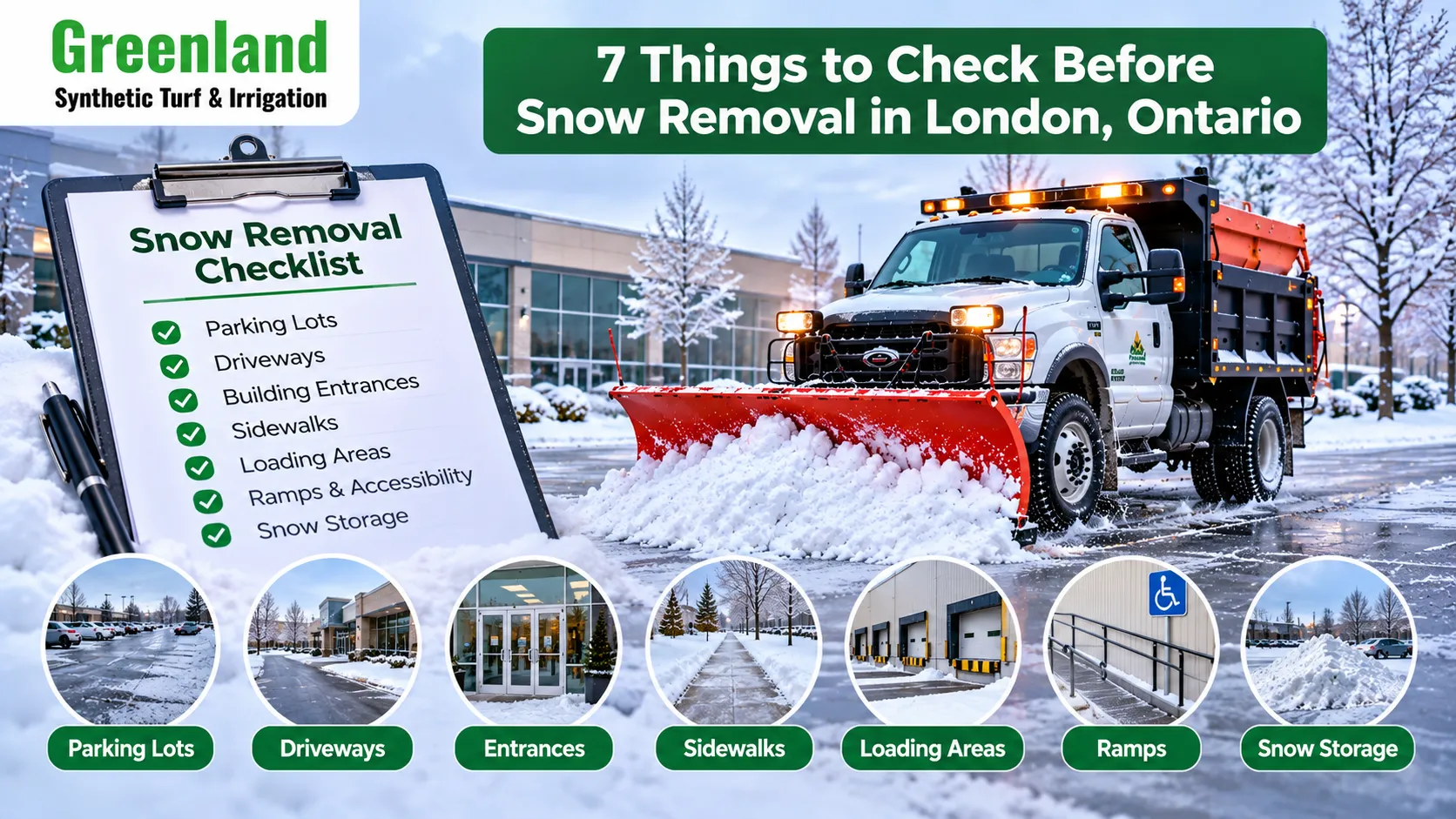
Here are seven things to check when planning snow removal in London, Ontario.
1. Identify Every Area That Needs Snow Removal
The first step is understanding which parts of your property require winter maintenance. Different areas may need different equipment, service frequencies and priorities.
For example, a commercial property may require clearing across:
- Parking lots and parking spaces
- Driveways and internal access roads
- Building entrances and loading areas
- Delivery and vehicle turning zones
- Sidewalks and pedestrian routes
- Ramps and designated accessible routes
Industrial properties may also need attention around loading docks, warehouse approaches and heavy-vehicle routes. Multi-residential properties may require maintenance across shared parking areas, driveways, walkways and entrances.
Before requesting a snow removal quote, create a list of the areas that must remain accessible. This helps contractors understand the site’s layout and prepare a service scope that reflects your property’s requirements.
2. Understand the Difference Between Snow Plowing and Snow Removal
Snow plowing and snow removal are related, but they do not always mean the same thing.
Snow plowing generally involves pushing accumulated snow away from designated surfaces, such as parking lots, driveways and access roads. Snow may be moved to designated storage areas on the property.
Snow removal can refer more broadly to clearing accumulated snow. Depending on the agreement, it may also involve relocating snow piles or arranging off-site hauling when storage space becomes limited.
This distinction matters for properties with restricted parking, limited storage space or large areas that need to remain accessible throughout winter.
When comparing London snow removal services, ask whether the quoted work covers plowing only, snow relocation, off-site hauling or a combination of services.
You can learn more about Greenland Irrigation’s snow and ice removal services to understand the winter maintenance offering and discuss which services may be appropriate for your property.
3. Plan for Ice, Not Just Snow
Clearing snow does not automatically eliminate icy conditions. Meltwater can refreeze when temperatures fall, while compacted snow may remain on busy surfaces after plowing.
Ice can develop around entrances, sidewalks, ramps, parking areas and loading zones. These conditions may affect both pedestrian movement and vehicle access.
A complete winter maintenance plan should consider whether additional ice management, de-icing or salting may be needed after snow clearing. The appropriate approach depends on the surface, temperature, drainage and site conditions.
When arranging snow removal in London, Ontario, confirm whether ice-control treatments are included in the service agreement or charged separately. Also identify areas that may need additional attention because of recurring drainage or refreezing issues.
4. Choose a Snow Removal Plan That Fits Your Property
Not every property needs the same winter service arrangement. The right plan depends on property size, operating hours, traffic, snowfall triggers and how frequently areas must be cleared.
Commercial snow removal in London, Ontario, may require attention to customer parking, entrances and business access. Industrial facilities may prioritise truck routes, loading docks and operational areas. Multi-residential sites may need coordinated maintenance across shared parking and pedestrian spaces.
Before agreeing to a service plan, discuss:
- Which areas are included
- What snowfall conditions trigger service
- How ongoing snowfall and repeat visits are handled
- Whether sidewalks and entrances are included
- How de-icing or salting is arranged
- Whether snow relocation or hauling may cost extra
A clearly defined agreement makes it easier to compare proposals and understand the level of maintenance being provided.
5. Consider Parking, Traffic and Operating Hours
Snow removal needs to work around how your property operates. A site that receives deliveries throughout the day may have different priorities from an office with predictable opening hours.
Parking areas, vehicle turning zones and entrances should be assessed before winter. Snow piles can reduce available space or obstruct visibility, while poorly planned clearing can interfere with vehicle movements.
Businesses should identify priority routes and communicate operating schedules to their winter maintenance contractor. If certain areas need to be cleared before opening or during specific delivery windows, these expectations should be discussed in advance.
For larger commercial and industrial properties, a site-specific plan can help coordinate equipment movement, clearing priorities and access requirements.
6. Compare Snow Removal Quotes Beyond the Price
The lowest quote is not necessarily the best option for your property. Contractors may offer different service scopes, snowfall triggers, equipment arrangements and additional treatments.
When comparing snow plowing in London, Ontario, check whether each quote covers the same areas and services.
Review the following before making a decision:
- The property’s full service area
- Seasonal or per-visit pricing structure
- Included visits and service triggers
- Sidewalk clearing and ice management
- Snow storage and relocation arrangements
- Additional charges and contract exclusions
- Communication and service documentation
Ask questions if any part of the agreement is unclear. Understanding the full scope helps you compare the likely total cost rather than focusing only on the initial price.
7. Prepare Before the First Major Snowfall
Waiting until a major snowfall to arrange winter maintenance can leave businesses with limited time to assess their needs and confirm service arrangements.
Preparing early gives property owners and managers an opportunity to review the site, identify problem areas, discuss service priorities and establish clear expectations.
Before winter begins, consider documenting your property’s layout, access routes, snow storage locations and areas that regularly develop ice. Confirm who will communicate service requests and how changes in conditions will be handled.
Businesses in London and surrounding communities should also verify that their chosen provider covers the property’s location and can agree to the service scope required.
A practical winter plan can make it easier to respond when snowfall, drifting or freezing conditions affect the site.
Why Choose a Planned Approach to Winter Maintenance?
Effective winter maintenance combines appropriate snow clearing with a clear understanding of how a property is used. It considers parking, vehicle access, pedestrian routes, snow storage and the potential need for ice-control treatments.
Greenland Irrigation provides winter maintenance services for applicable properties in London, Ontario, with service details and scope confirmed according to each property’s requirements and agreement.
If you are planning ahead for winter, explore Greenland Irrigation’s website and learn more about its snow and ice removal services.
Discuss your property’s layout, priority areas and winter maintenance requirements to determine which services may be suitable.
Frequently Asked Questions
1. What should I look for when choosing snow removal in London, Ontario?
Consider the areas requiring service, snowfall triggers, equipment needs, operating hours, ice-control requirements, snow storage and the contract’s included services. Compare quotes based on equivalent service coverage.
2. What is the difference between snow plowing and snow removal?
Snow plowing generally pushes accumulated snow away from designated surfaces. Snow removal can include broader clearing activities and, where agreed, relocating snow piles or hauling snow off-site.
3. Does commercial snow removal include ice removal?
Not always. Ice removal, salting and de-icing may be included, optional or charged separately. Confirm the exact services and applicable terms with the provider.
4. When should businesses arrange snow removal services?
Planning before winter demand increases gives businesses time to assess their property, compare quotes and agree on service requirements before significant snowfall occurs.
5. Which properties may need commercial snow removal?
Offices, retail properties, industrial facilities, warehouses, condominium developments and other multi-residential properties may require winter maintenance. The appropriate service depends on the property’s layout, operations and agreed scope.