
Warehouse Snow Removal: 8 Ways to Keep Loading Docks and Deliveries Moving All Winter
Winter weather can create significant challenges for warehouses and distribution facilities in London, Ontario. Snow accumulation around loading docks, truck routes, parking areas and building entrances can complicate vehicle movements and disrupt daily operations.
For facilities that rely on scheduled deliveries and outgoing shipments, maintaining access is about more than clearing a parking lot. Snowbanks can restrict turning space, icy dock approaches can create difficult working conditions, and blocked routes can interfere with the movement of trucks and site equipment.
Effective warehouse snow removal starts with understanding how the facility operates. A practical winter maintenance plan identifies critical access routes, establishes clearing priorities and accounts for snow storage, pedestrian access and changing weather conditions.
Here are eight ways warehouse operators and property managers can prepare their sites for winter.
1. Prioritise Loading Docks and Delivery Areas
Loading docks are among the most operationally important areas of a warehouse. Trucks need sufficient room to approach, manoeuvre, reverse and leave, while employees need practical access to loading and unloading areas.
Snow accumulation around dock approaches can reduce available space and interfere with vehicle positioning. Snowbanks may also obstruct sightlines or narrow the routes used by delivery vehicles.
Warehouse snow removal should therefore identify loading docks and delivery zones as priority areas rather than treating them as ordinary sections of a parking lot.
What to do: Map every loading dock, staging area and delivery approach before winter. Discuss which areas need priority clearing and how access will be maintained during prolonged snowfall.
2. Keep Truck Routes and Turning Areas Accessible
Warehouses often accommodate tractor-trailers, delivery trucks, forklifts and other operational vehicles. These vehicles need adequate clearance and turning space to move around the facility.
Snow piles placed too close to intersections or turning areas can restrict manoeuvring space. Accumulation along internal roads can also narrow routes that need to remain usable.
Industrial snow clearing should account for vehicle movement across the entire site, including entrance roads, internal routes, staging areas and designated parking spaces.
What to do: Identify the main truck routes and turning areas on a site plan. Establish suitable snow storage locations that do not unnecessarily obstruct vehicle movement or visibility.
3. Plan Snow Storage Before Space Runs Out
Snow removed from a warehouse site has to be placed somewhere. At the beginning of winter, designated storage areas may appear sufficient, but repeated snowfall can gradually reduce the available space.
Snow piles may eventually encroach on parking areas, loading zones, drive lanes or pedestrian routes. They can also affect visibility and contribute to drainage problems when melting snow collects in the wrong locations.
A snow storage plan helps prevent these issues from becoming more difficult to manage later in the season.
What to do: Select designated snow storage areas before winter begins. Review how much space is available and discuss when snow relocation or off-site hauling may be necessary if the piles become too large.
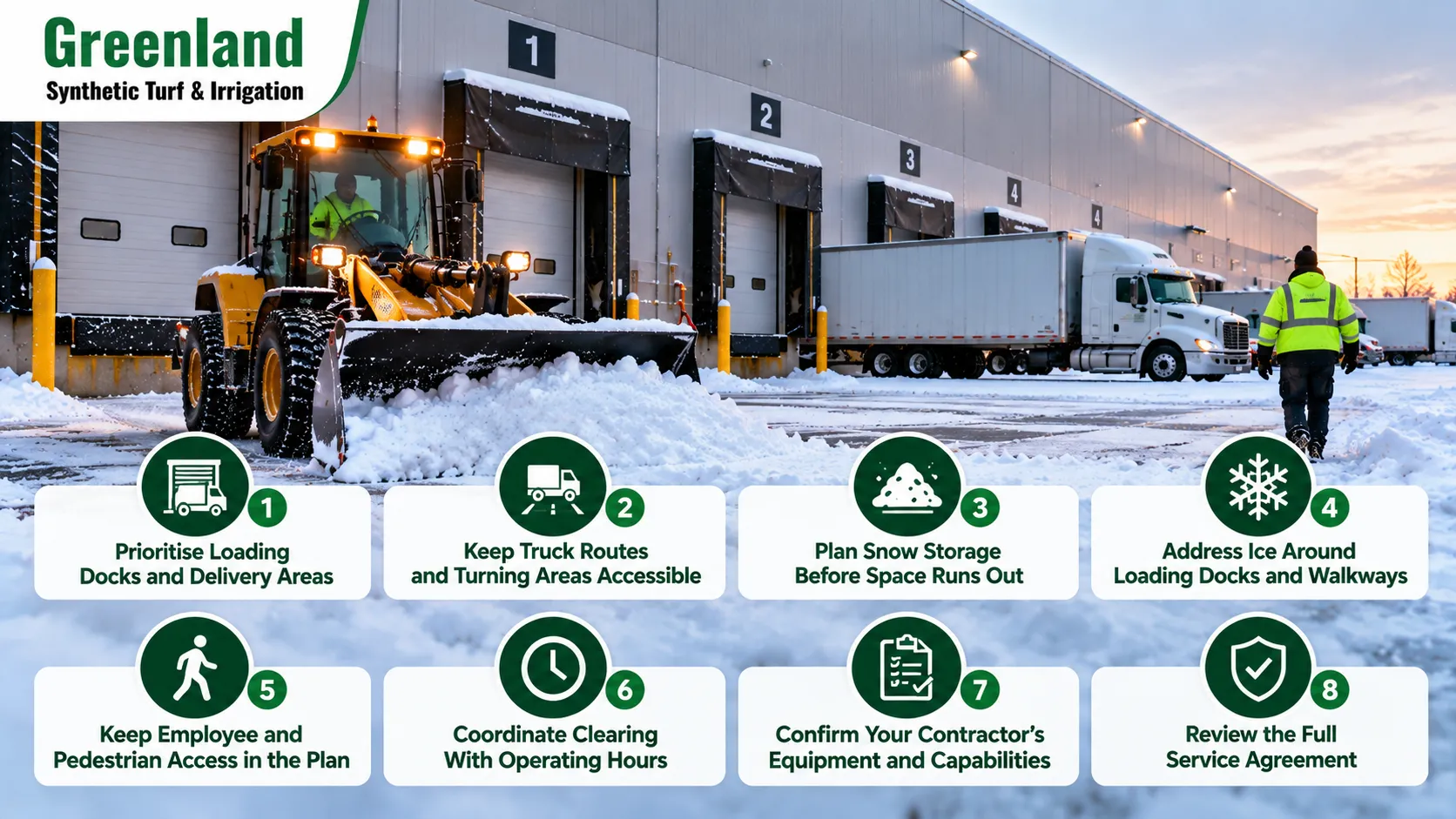
4. Address Ice Around Loading Docks and Walkways
Clearing accumulated snow does not automatically eliminate icy conditions. Meltwater can refreeze when temperatures fall, while repeated vehicle movements may compact remaining snow on busy surfaces.
Loading dock approaches, ramps, entrances, sidewalks and employee walkways may require additional attention after plowing. The appropriate response depends on the surface, temperature and site conditions.
Winter warehouse safety should include a process for identifying residual ice and arranging suitable treatment where needed.
What to do: Include high-priority areas in the site’s ice-monitoring plan. Confirm whether de-icing or salting is included in the snow removal agreement, which treatments are available and how additional applications are handled.
Greenland Irrigation’s snow and ice removal services provide a relevant starting point for discussing combined winter maintenance needs.
5. Keep Employee and Pedestrian Access in the Plan
Warehouse sites often have separate routes for vehicles and pedestrians. Employees may need to move between parking areas, entrances, offices, break areas and warehouse buildings throughout their shifts.
If snow is pushed onto walkways or accumulates near entrances, pedestrian access can become difficult. Icy surfaces may also develop around ramps, steps and crossings.
A vehicle-focused snow clearing plan may leave these areas overlooked unless they are explicitly included in the service scope.
What to do: Identify employee walkways, building entrances, accessible routes, pedestrian crossings and other frequently used paths. Confirm how these areas will be cleared and whether ice-control treatments are included where appropriate.
6. Coordinate Snow Clearing With Warehouse Operating Hours
Many warehouses operate early in the morning, overnight or across multiple shifts. Delivery schedules and loading activities may continue while snow removal is required.
Clearing during busy operational periods can require additional coordination to avoid unnecessary disruption. Waiting until vehicles arrive may also make it more difficult to access certain areas.
The maintenance plan should reflect the facility’s operating schedule and identify when critical routes need to be accessible.
What to do: Share shift patterns, delivery windows, loading schedules and access restrictions with the contractor. Agree on service triggers and how repeat visits will be handled during ongoing snowfall.
7. Choose Equipment That Fits the Site
Large warehouse yards may require different equipment from smaller parking areas or narrow access routes. The appropriate equipment depends on the site’s size, layout, snow accumulation and the areas that need clearing.
Using equipment that is unsuitable for the space may make it harder to work around parked vehicles, loading docks and restricted areas. Equipment selection should also account for designated snow storage locations and the sequence in which areas will be cleared.
What to do: Arrange a site assessment before winter. Review the property’s layout, identify restricted spaces and discuss which equipment and clearing sequence may be appropriate for the work.
8. Establish Clear Service Triggers and Communication
A warehouse may require repeat snow clearing during a prolonged storm, particularly when deliveries and vehicle movements continue. Without clear service triggers, property managers may be uncertain about when additional visits are required or who should request them.
A written winter maintenance agreement helps define the expected scope and how changing conditions will be handled.
What to do: Confirm the snowfall threshold that triggers service, how continued snowfall is managed, which areas receive priority and whether repeat visits incur additional charges. Establish a communication process for reporting blocked routes, recurring ice or changing operational requirements.
What Should a Warehouse Snow Removal Plan Include?
An effective warehouse snow removal plan should reflect the facility’s operational requirements and site layout.
Before winter begins, review these key elements:
- Loading docks: Identify priority docks, approaches and staging areas.
- Truck routes: Map entrances, internal roads, turning areas and delivery paths.
- Snow storage: Establish approved storage areas and a plan for excess accumulation.
- Ice management: Identify locations that may need de-icing or additional monitoring.
- Pedestrian access: Include employee walkways, entrances, ramps and crossings.
- Operating hours: Account for shift changes, deliveries and restricted access periods.
- Service triggers: Define when clearing begins and how repeat visits are handled.
- Contract scope: Confirm included services, exclusions and potential additional charges.
- Communication: Establish how site issues are reported and how service activity is documented.
Reviewing these details with a contractor helps establish clear expectations before winter conditions create operational challenges.
How to Choose an Industrial Snow Removal Contractor
Warehouse operators should compare contractors based on their proposed service scope, equipment requirements, communication process and ability to address the facility’s layout.
Ask how the contractor plans to maintain access around loading docks, truck routes and designated snow storage areas. Confirm whether pedestrian clearing and de-icing are included or handled separately.
It is also important to understand the agreement’s snowfall triggers, repeat-visit rules, exclusions and additional charges. A detailed quote makes it easier to compare proposals based on the work required rather than the headline price alone.
For warehouses and other large operational sites, the maintenance plan should be tailored to the facility rather than based on a generic parking lot clearing arrangement.
Warehouse Snow Removal in London, Ontario
Warehouses and distribution facilities in London, Ontario, have different winter maintenance requirements depending on their size, layout, traffic and operating schedules. Loading docks, delivery routes, employee parking and pedestrian areas may all need consideration within one coordinated plan.
Greenland Irrigation provides winter maintenance services for applicable industrial and commercial properties, subject to the service scope agreed for each property.
If you manage a warehouse or industrial facility, explore our industrial snow plowing services to discuss your property’s winter maintenance requirements. You can also review our snow and ice removal services when planning for snow accumulation and icy conditions.
Planning ahead helps define access priorities, snow storage arrangements and the services required to support your facility throughout winter.
Frequently Asked Questions
1. What does warehouse snow removal include?
Depending on the contract, warehouse snow removal may include clearing designated parking areas, internal roads, loading dock approaches and vehicle access routes. Snow relocation, sidewalk clearing, de-icing and off-site hauling may be included or charged separately.
2. Why are loading docks a priority during winter?
Loading docks support deliveries, shipments and the movement of goods. Snow accumulation can restrict vehicle manoeuvring and access, so dock approaches and staging areas should be considered when setting winter maintenance priorities.
3. How often should a warehouse site be cleared during snowfall?
The required frequency depends on snowfall, site traffic, operating requirements and the agreed service triggers. Facilities that remain operational during prolonged snowfall may need repeat visits according to their maintenance plan.
4. Does industrial snow removal include de-icing?
Not automatically. De-icing and salting may be included, offered as separate services or charged additionally. Confirm the available treatments and exact scope with the provider.
5. How can warehouses manage snow storage throughout winter?
Warehouses should designate snow storage areas before winter and review how repeated snowfall affects available space. When on-site storage becomes insufficient, snow relocation or off-site hauling may be needed, depending on the property and service agreement.