
A snow-covered parking lot can quickly become a challenge for businesses in London, Ontario. Snow accumulation can reduce available parking, restrict vehicle movement, block entrances and make it harder for customers, employees and delivery drivers to access a property.
However, effective parking lot snow plowing involves more than pushing snow away after a storm. Property managers need to consider traffic flow, pedestrian access, snow storage, loading zones, drainage and the potential for ice to develop after clearing.
Overlooking these details can lead to recurring maintenance problems, restricted access and unexpected winter service requirements.
Whether you manage a retail plaza, office building, industrial facility or multi-residential property, avoiding common planning mistakes can help you prepare for changing winter conditions.
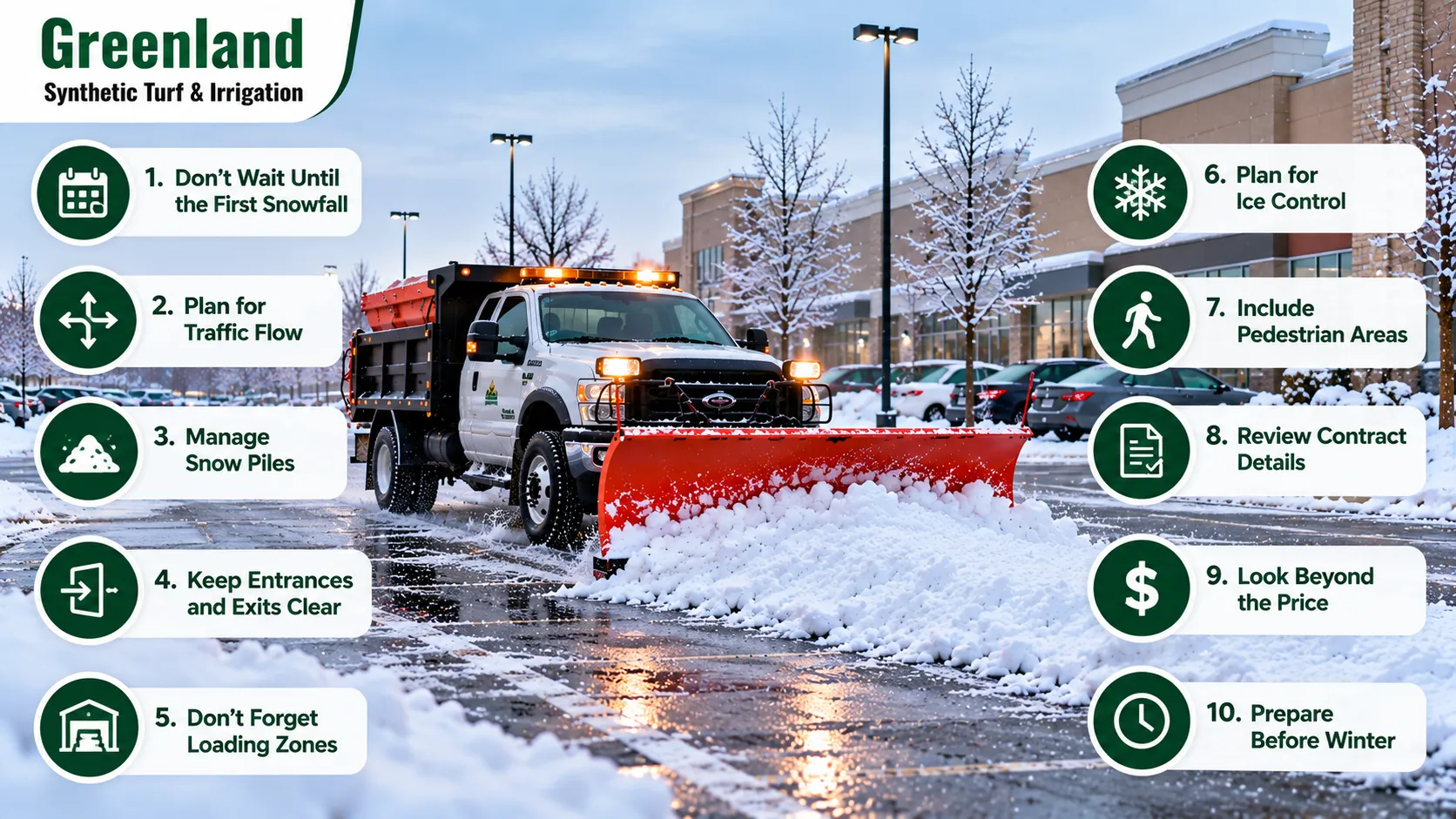
Here are 10 mistakes to avoid when planning commercial parking lot snow removal in London, Ontario.
1. Waiting Until the First Major Snowfall to Make a Plan
One of the most common winter maintenance mistakes is waiting until snow starts accumulating before arranging a contractor or defining service requirements.
During a significant snowfall, businesses may have limited time to assess their property’s needs, compare proposals and establish clear service expectations.
Last-minute planning can also leave important details unresolved, including which areas require priority clearing, where snow should be stored and whether sidewalks or de-icing are included.
How to avoid it: Review your property before winter begins. Identify parking areas, entrances, vehicle routes, pedestrian paths and snow storage locations. Agree on service triggers, responsibilities and communication procedures before the season starts.
2. Clearing the Parking Lot Without Planning Traffic Flow
A parking lot is not simply an open paved surface. Vehicles enter, turn, reverse, park and move through designated lanes. Poorly planned snow clearing can leave snowbanks in inconvenient locations or restrict the space vehicles need to manoeuvre.
This can be particularly challenging around narrow drive lanes, corners, intersections and entrances where visibility and turning space matter.
Commercial parking lot snow plowing should account for how the property operates, not just how much snow needs to be removed.
How to avoid it: Map the main vehicle routes and identify turning areas, entrances and high-traffic lanes. Discuss the clearing sequence with your contractor so snow placement does not unnecessarily obstruct movement.
3. Creating Snow Piles That Reduce Parking or Visibility
Snow piles are a necessary consideration when plowing moves accumulated snow away from active surfaces. However, placing them without a clear plan can reduce parking capacity, block sightlines or interfere with access routes.
As snowfall continues, storage areas may become increasingly restricted. Piles that initially appear manageable can eventually encroach on drive lanes, pedestrian routes or designated parking spaces.
How to avoid it: Identify suitable snow storage areas before winter. Keep piles away from critical entrances, intersections, drainage paths and areas where visibility is important. If on-site space is limited, discuss snow relocation or off-site hauling with your contractor.
4. Ignoring Entrances and Exit Routes
Main entrances and exits are among the most important areas of a commercial parking lot. If snow accumulates near access points, vehicles may have difficulty entering or leaving the property.
Snowbanks can also narrow the available opening, restrict sightlines and make turning more difficult. These issues may become more pronounced after repeated plowing.
How to avoid it: Include entrances, exits and connecting access roads in the property’s priority clearing plan. Establish how these areas will be maintained during ongoing snowfall and how additional service will be handled when conditions change.
5. Forgetting Loading Zones and Delivery Areas
Businesses that receive deliveries need practical access around loading areas, service entrances and designated stopping zones. Snow accumulation in these locations can interfere with vehicle positioning and routine operations.
Industrial facilities and retail properties may have delivery schedules that require specific areas to remain accessible at particular times.
A general parking lot clearing plan may not adequately address these operational requirements.
How to avoid it: Identify loading docks, delivery approaches and vehicle staging areas before winter. Tell your contractor which locations need priority attention and confirm whether the service agreement covers these areas.
6. Assuming Plowing Automatically Removes Ice
Snow plowing removes accumulated snow, but it may leave behind compacted snow or moisture that later freezes. Changing temperatures can also create new icy patches after a clearing visit.
Parking spaces, drive lanes, entrances and pedestrian crossings may need additional attention depending on surface conditions and weather.
Ignoring ice management can leave a property with recurring winter maintenance concerns even when the main areas have been plowed.
How to avoid it: Include ice monitoring in your winter maintenance planning. Confirm whether de-icing or salting is included in the contract, which areas can be treated and how additional applications are charged.
For properties that need both clearing and ice control, explore Greenland Irrigation’s snow and ice removal services.
7. Overlooking Pedestrian Routes and Accessible Parking Areas
Parking lots serve pedestrians as well as vehicles. Customers and employees need practical routes between parking spaces, sidewalks and building entrances.
If snow is pushed onto walkways or accumulates around accessible parking spaces, ramps and crossings, pedestrian access may become difficult.
Clearing the main vehicle lanes does not necessarily address every part of the property that people use.
How to avoid it: Mark pedestrian routes, accessible parking spaces, ramps and building entrances on your winter site plan. Confirm whether these areas receive separate clearing and whether suitable ice-control treatments are part of the agreed service.
8. Using the Same Service Plan for Every Snowfall
Not every winter event creates the same maintenance requirements. A light snowfall may require a different response from prolonged snowfall, drifting snow or a storm that affects access routes over several hours.
A plan that does not account for changing conditions may leave property managers uncertain about when repeat visits are needed or how additional work is authorised.
How to avoid it: Define the snowfall triggers and service expectations in advance. Discuss how continued snowfall, drifting and changing site conditions will be handled, including any additional charges for repeat visits.
9. Overlooking Drainage and Recurring Ice Problems
Snow piles and accumulated meltwater can contribute to recurring ice in certain parts of a parking lot. Water may collect in low spots, near entrances or around drainage features before freezing when temperatures fall.
If snow is repeatedly stored in the wrong location, meltwater may flow across drive lanes or pedestrian areas.
Treating the resulting ice without identifying the underlying problem may mean the same location requires attention repeatedly.
How to avoid it: Identify areas where water collects or ice repeatedly forms. Review snow storage locations and drainage concerns, and include these areas in winter inspections. Where necessary, address underlying drainage issues separately from routine snow clearing.
10. Choosing a Contractor Based on Price Alone
The lowest quote does not necessarily provide the best fit for a commercial property. Contractors may differ in their service scope, snowfall triggers, equipment requirements, included visits and approach to ice management.
A lower initial price may exclude sidewalk clearing, de-icing, snow relocation or additional visits during prolonged snowfall.
Comparing prices without reviewing these differences can make it difficult to understand the actual cost of maintaining the property.
How to avoid it: Compare quotes with equivalent service requirements. Confirm the areas covered, snowfall triggers, included visits, additional charges, snow storage arrangements and communication procedures. A written agreement should make the responsibilities of both parties clear.
What Should a Commercial Parking Lot Snow Removal Plan Include?
A practical winter plan should reflect the property’s layout, traffic patterns and operating requirements. Before the season begins, review the following items with your contractor:
- Parking areas: Identify the spaces and paved sections that require clearing.
- Traffic flow: Map entrances, exits, drive lanes, turning areas and internal access roads.
- Snow storage: Designate suitable storage locations and discuss relocation when space becomes limited.
- Priority zones: Identify loading areas, delivery routes and entrances that require particular attention.
- Pedestrian access: Include sidewalks, accessible parking spaces, ramps and building entrances.
- Ice control: Confirm whether salting or de-icing is included and how additional treatments are arranged.
- Service triggers: Define when service begins and how ongoing snowfall or repeat visits are handled.
- Communication: Establish how property managers report issues and receive service updates.
- Contract scope: Review exclusions, additional charges and the services included in the agreement.
These details provide a clearer basis for planning winter maintenance and comparing contractor proposals.
Commercial Parking Lot Snow Plowing in London, Ontario
Businesses in London, Ontario, have different winter maintenance requirements depending on their property size, traffic levels and daily operations. A retail parking lot may prioritise customer access and entrances, while an industrial site may need particular attention around loading areas and vehicle routes.
Greenland Irrigation provides winter maintenance services for applicable commercial, industrial and multi-residential properties, subject to the service scope agreed for each property.
If you are planning winter maintenance for your business, explore our commercial snow plowing services to discuss parking lot clearing, priority areas and your property’s winter requirements.
Planning ahead helps establish clear expectations for snow storage, access routes and any additional ice-control services that may be needed during the season.
Frequently Asked Questions
1. What does commercial parking lot snow plowing include?
Depending on the agreement, it may include plowing designated parking areas, drive lanes and vehicle access routes. Snow relocation, off-site hauling, sidewalk clearing and de-icing may be included or charged separately, so confirm the exact scope before signing a contract.
2. Where should snow piles be placed in a commercial parking lot?
Snow should be stored in designated areas that do not unnecessarily obstruct parking, entrances, traffic flow, pedestrian routes, visibility or drainage. The appropriate locations depend on the property’s layout and available space.
3. How often should a commercial parking lot be plowed?
The required frequency depends on snowfall, the property’s operating requirements, agreed service triggers and the need to maintain important access routes. Prolonged snowfall may require repeat visits under the terms of the contract.
4. Does parking lot snow plowing include salting and de-icing?
Not always. Some agreements include ice-control treatments, while others charge separately for materials and applications. Confirm which treatments are available and included in the service scope.
5. When should businesses arrange parking lot snow removal in London, Ontario?
Businesses should plan before winter demand increases. Early preparation gives property managers time to assess the site, identify priority areas, compare quotes and agree on service requirements before significant snowfall occurs.